
Services
We build websites for three starting situations. All of them begin at the same point: what the business needs from its website. Which situation describes you?
Websites
 01
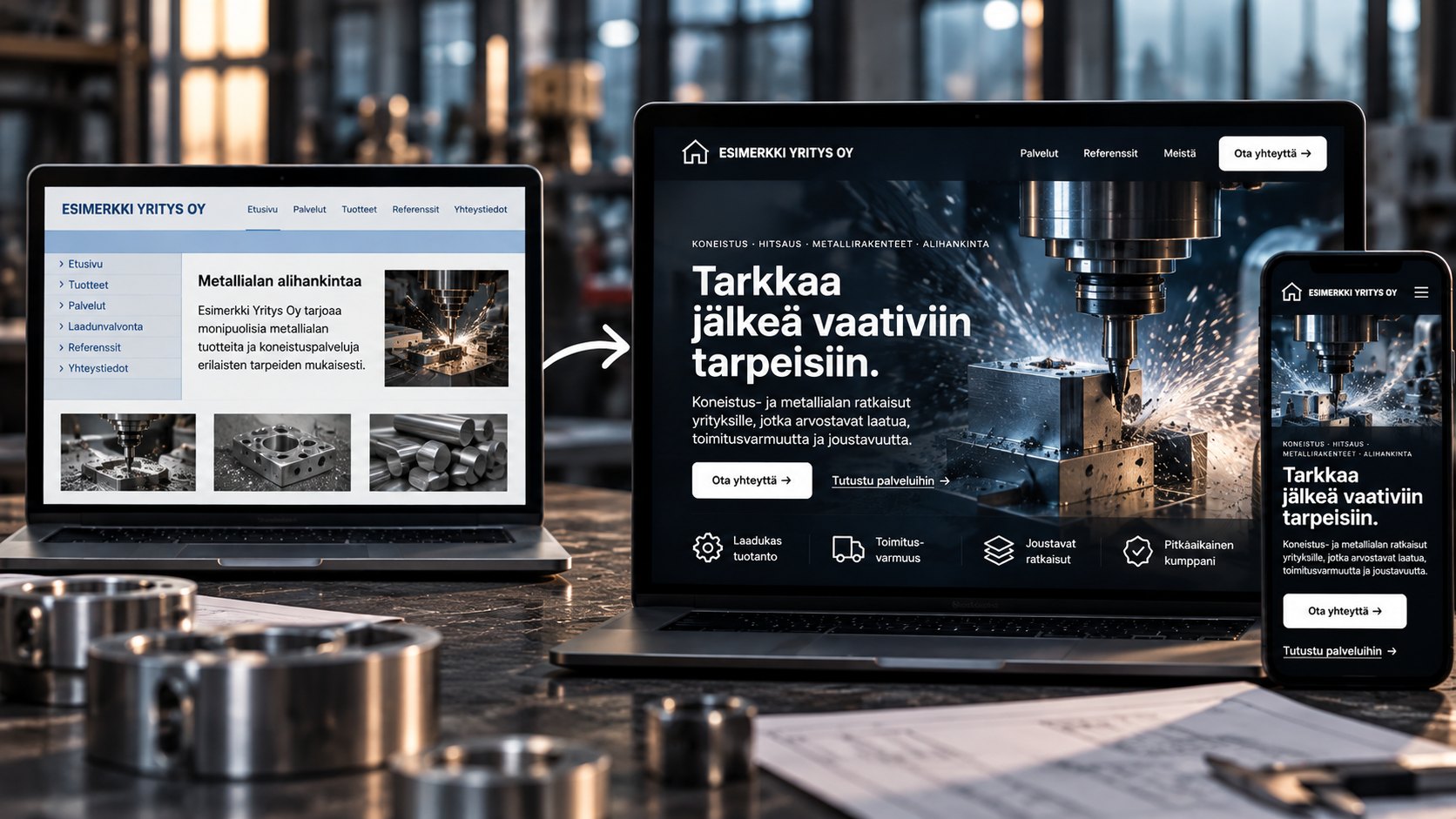
Website redesign
The current site no longer represents the company.
We build a new site around what the company needs now.
Read more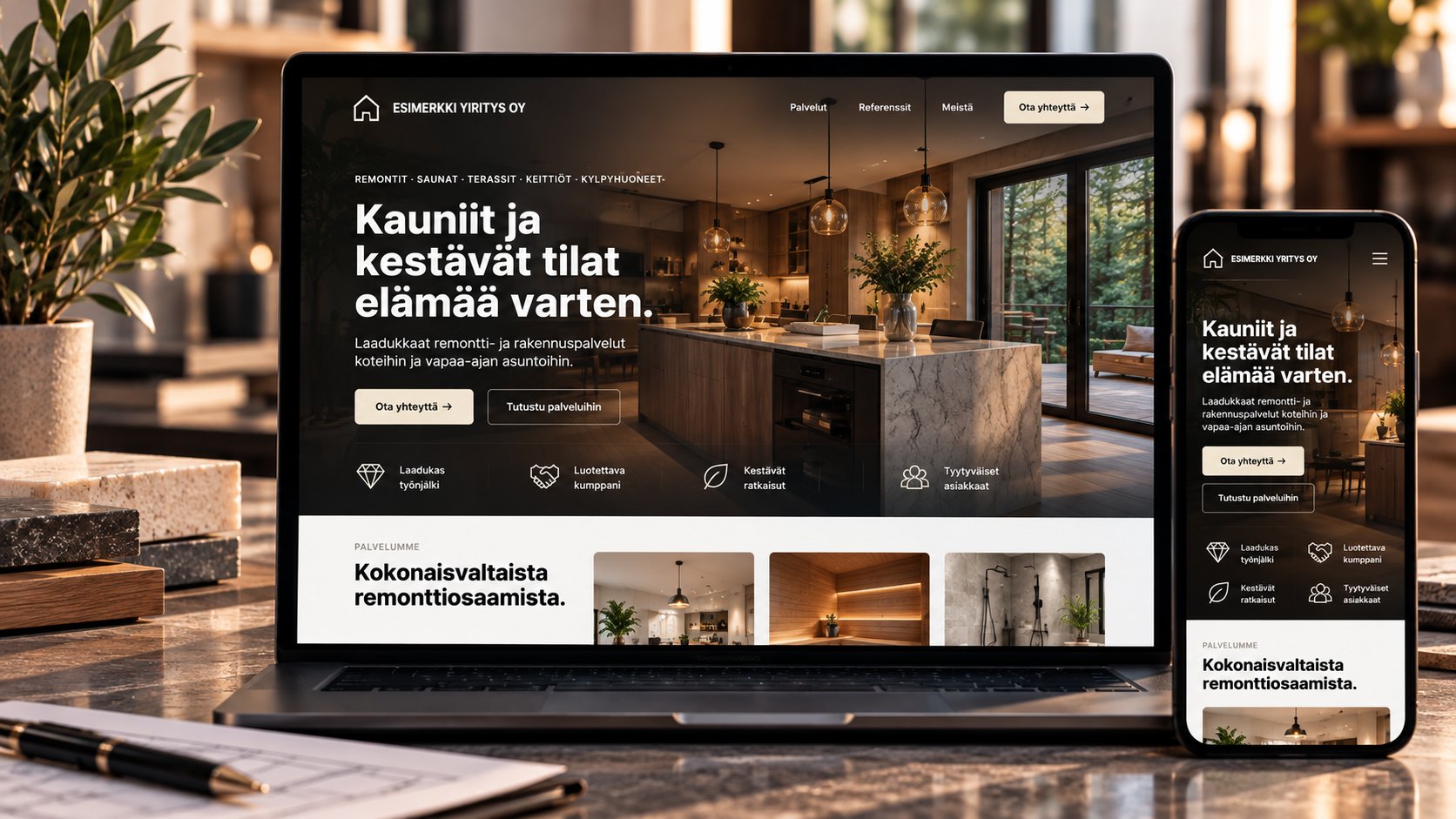 02
New website
There is no proper site yet.
Structure, content and design are planned around the business from the start.
Read more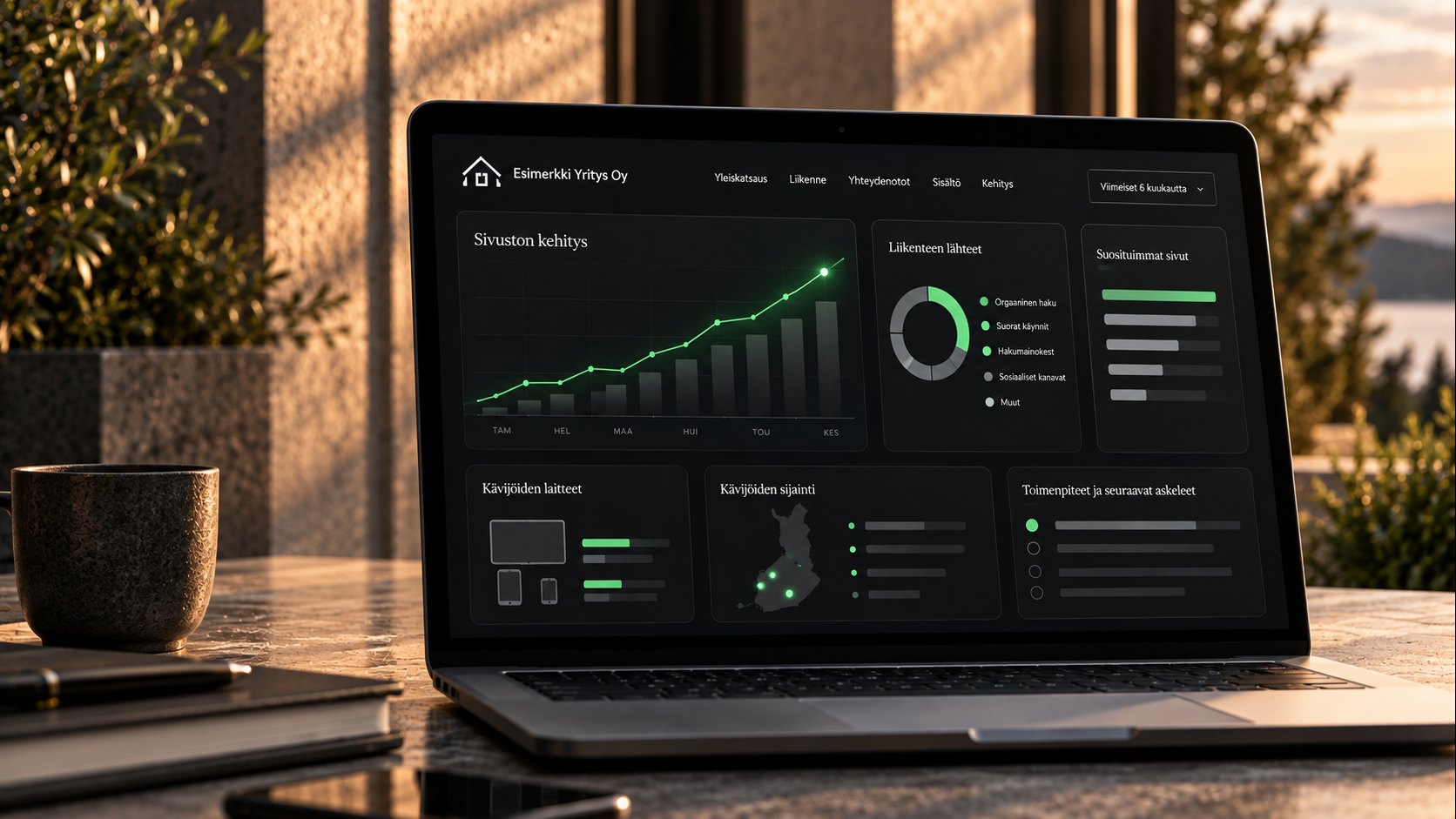 03
Continuous improvement
The site exists, but nobody develops it.
We watch what the site does and improve it on that basis.
Read more
Why a redesign pays off
What a redesign changes
A redesign makes the website a better tool — for the company and for its customers. This is how it shows.
Offering
Visitors don't immediately understand what you sell and to whom.
Clear at first glance.
The offering is clear at first glance, and the right customer recognises themselves.
First impression
An outdated site gives a weaker picture of the company than it deserves.
Matches the company's real standard.
The site matches the company's real standard, and trust forms before the first contact.
Contact
Getting in touch depends on whether the visitor bothers to look for the contact details.
One clear next step on every page.
Every page has one clear next step, and it leads to contact.
Structure
The pages are organised from the company's point of view, not around the customer's questions.
Follows the customer's questions.
The structure follows what the customer wants to know before getting in touch.
Phone
On a phone the site is slow and awkward, even though many customers open it there.
Works as well as on a computer.
The site works on a phone as well as on a computer — right through to contact.
Measurement
Nobody knows what the site produces or where enquiries come from.
You see what the site produces.
You see what happens on the site and where enquiries come from, and the site is developed on that basis.
Technical base
An old technical base slows the site down and makes every change laborious.
Fast, maintainable, readable by search engines.
A fast, easily maintained build whose structure search engines can read.
Website redesign
Looks like the company. Does its job.
For when the current site no longer represents the company. We first find out what the business and its customers need from the site, and build the new one from that.
- Review of the business, the industry and the current site
- What the site is needed for, what works, what is missing.
- New structure and content
- In a second language where needed.
- Design, build and launch
- Old addresses redirected to new ones.
- Measurement from launch
- Development on real evidence.
New website
Built around the business from the start.

The company, brand or service is new — or the site was never done properly. There is nothing old to preserve, but a lot to decide.
We start with what you sell, to whom, and why a customer would choose you. Only then do we decide the pages, the content and the design. The site is built measurable from the start — and bilingual, if the business needs it.
- Offering and structureWhat you sell, to whom — and which pages that requires.
- ContentCopy in your customers' language, in two languages if needed.
- DesignBased on your existing identity. If there is none yet, a light identity piece is agreed separately.
- Build and launchFast, works on a phone, measurable from the start.
First: an assessment of the company's situation and goals.
Continuous improvement
Improvement from measurement, not guesswork.

The site exists, but nobody develops it. Changes wait, and nobody knows what the site actually produces.
After a redesign or a new site, development can continue in agreed periods. We look at what happens on the site and make improvements in order of impact — to content, the path to contact, speed, new pages or a second language.
- We measureWhat the site does and where enquiries come from.
- We identifyFirst what matters most.
- We improveContent, the contact path, speed, new pages or a second language — without a new project.
- We measure againDevelopment continues in agreed periods.
Maintenance keeps a site running. Continuous development makes it better — based on what actually happens on the site.
Continuous development is agreed separately; it is not an automatic part of a project. It requires measurement to be in place — after a redesign or a new site, it is.
Company presentations
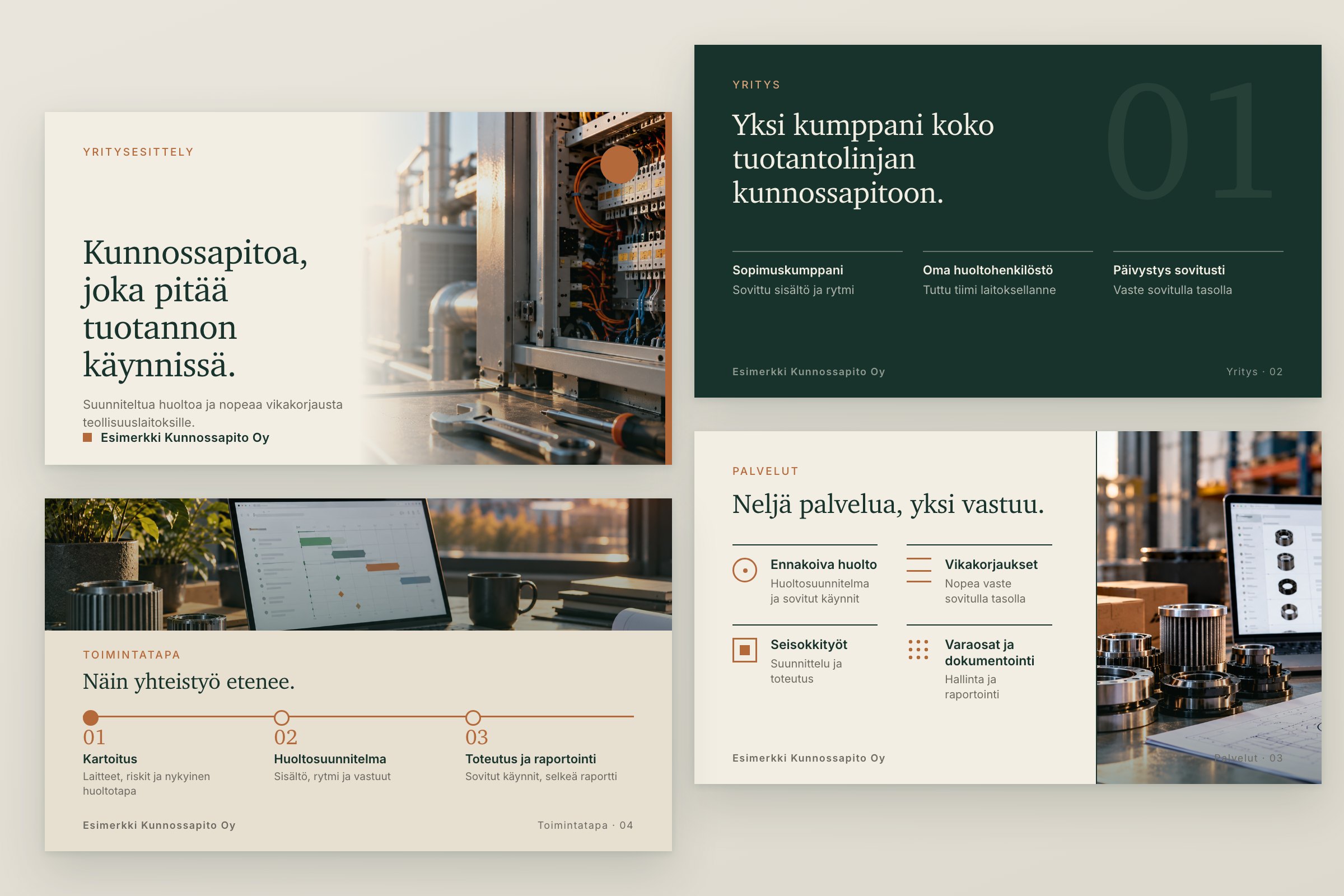
A company presentation that says what matters.
A professionally designed company presentation says what matters about the company, its services and expertise, in a clear and easily shareable form – for sales meetings, proposals and introducing the company. Geometrics Lab handles the structure, the content and the visual execution.
What the project includes
These are part of every project.
- Structure and content planning
- Text in your customers' language
- Design on your identity
- Build and launch
- Speed and accessibility
- Search foundations
- Measurement foundation
Where needed
When the company, the site or the technical situation calls for it. Scope is agreed per project before work begins.
- A second language versionA second language with a structure that suits the site.
- Booking, forms and integrationsBooking, contact and other forms, and suitable connections to external services. Feasibility is checked in the project.
- Custom pages and featuresProject-specific solutions beyond the base website, where technically justified.
- Campaign and landing pagesPages for a specific service, campaign or acquisition purpose.
- A content structure that supports searchService and content structure, and page expansion, based on relevant search needs.
- Analytics and measurementSetting up website analytics and the agreed measurement.
- Domain, hosting and publishing environmentSetting up the technical environment and publishing. Your company's own services stay in your company's name.
- Technical implementation of privacy and cookie solutionsThe necessary technical implementation, based on the project's requirements and the content supplied.
We find out what your site needs, and we take responsibility for delivering it.
The starting point becomes clear in the assessment.
Free, about 45 minutes, remote. We look at your company — and your site, if there is one — before we meet.